
The Conversational Workshop: When Your Role Is to Focus, Not Inform

I recently spent eighteen hours across six sessions with an international team of instructional designers, e-learning developers, and content specialists. We didn’t build a single thing. I didn’t deliver a single activity. We talked, explored, and learned.
The client wanted to go from good to better, to modernise their practice without any specific change initiative driving the work. These were experienced professionals, most with five or more years in the field, who weren’t doing anything wrong but hadn’t spent much time examining their collective practice. Each session had a loose focus, anything from user experience through to accessibility, AI, and effective assessment, but nothing was off-limits, and the topics served as starting points rather than rigid agendas.
A traditional workshop would have had me delivering activities, setting challenges, and prompting them to create outputs. That approach has its place, and for teams building foundational skills, it can be exactly what’s needed. But this group didn’t need me to explain how to write an effective multiple-choice question or visually balance a slide; they already knew. What they needed was the space and confidence to share, ask, self-challenge, and explore ideas together.
People are often surprised when I explain that we’re going to have a series of conversations, that their input is as valid and valuable as mine, that my job is to focus and shape rather than inform. There’s usually a moment of uncertainty, but what tends to surprise them more is how much insight they gain from colleagues they’ve worked alongside for years but never discussed these things with in any depth.
I’ve been quite relaxed in how I’ve described this, but don’t be fooled. It shouldn’t surprise any of us that something like this works. The psychological foundations are well-established, and the same core considerations we should consider in every potential training intervention. Autonomy, competence, and relatedness; the conversational workshop addresses all three. Participants have real choice in what they discuss and how they contribute; their existing expertise is acknowledged and built upon rather than ignored, and the format fosters connection with peers. If you’re paying attention, you may notice that this sounds distinctly like self-determination theory. Research in workplace contexts has shown that environments supporting these three needs lead to greater engagement and better performance (Deci, Olafsen, and Ryan, 2017).
Note: If you’d like to learn more about Self-Determination Theory, I highly recommend “Self-Determination Theory: Basic Psychological Needs in Motivation, Development, and Wellness” by Richard Ryan, Edward Deci.
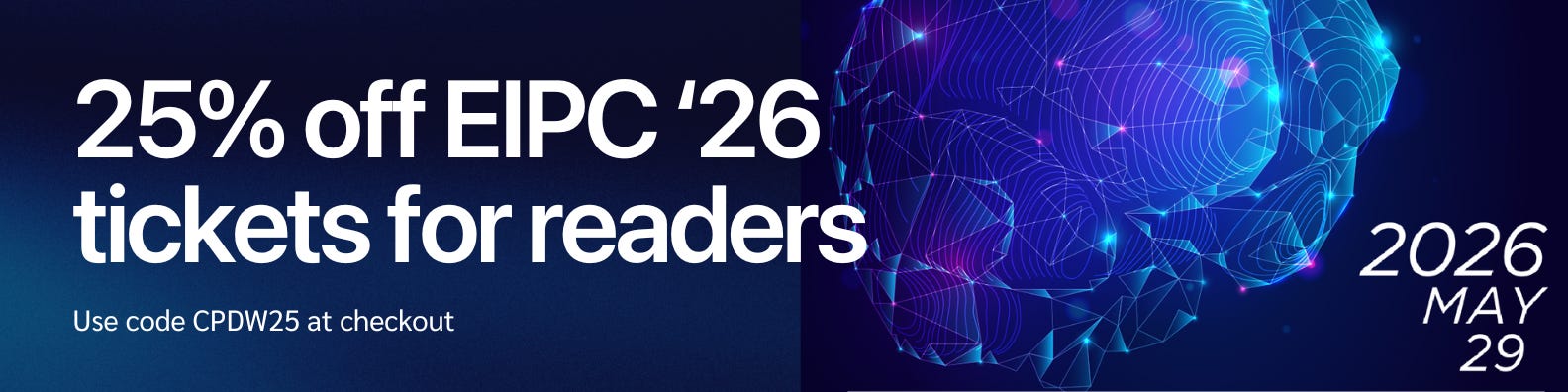
As a reader of the Instructional Design Tips Substack, you can get 25% off a ticket to the very first IDTX Evidence-Informed Practice Conference.
This one-day event is set for the 29th of May 2026 and will be held in Birmingham city centre, UK. The day will see us bring together researchers, scientists, and practitioners to discuss how we utilise the wealth of scientific understanding, research, and evidence to improve workplace training.
To claim your discounted ticket, head over to the IDTX website and use code CPDW25 at checkout.
By the final session, I was doing far less of the challenging because everyone in the conversation had become comfortable challenging each other and themselves, often offering up deliberately self-contradictory positions to test their own thinking. One participant told me he had been dreading another workshop; they’d all been so boring and repetitive. He said he felt he’d gotten to know his peers more in these sessions than in six years of working with them, and that the team knew more than they’d realised.
I don’t put enormous stock in immediate feedback as a measure of business impact, but that observation matched what I saw between the first and last session. By the time we were wrapping up, the team’s thinking about their work, and even, to an extent, their purpose within the organisation, had notably changed.
Now that doesn’t mean they were all in agreement, quite the opposite. And as I said to them at the end of the session, whilst our fixed time together is over after six sessions, the whole point of the conversational approach is that they can continue it indefinitely among themselves. In fact, the approach only works when people are willing to do that.
This approach requires experienced, informed teams. If you’ve got a group with limited experience between them, you’ll need something more structured. But when the expertise is already in the room, sometimes the most valuable thing a facilitator can do is create the conditions for people to discover what they already know, together.
References
Deci, E.L., Olafsen, A.H. and Ryan, R.M. (2017) ‘Self-determination theory in work organizations: The state of a science’, Annual Review of Organizational Psychology and Organizational Behavior, 4, pp. 19-43.